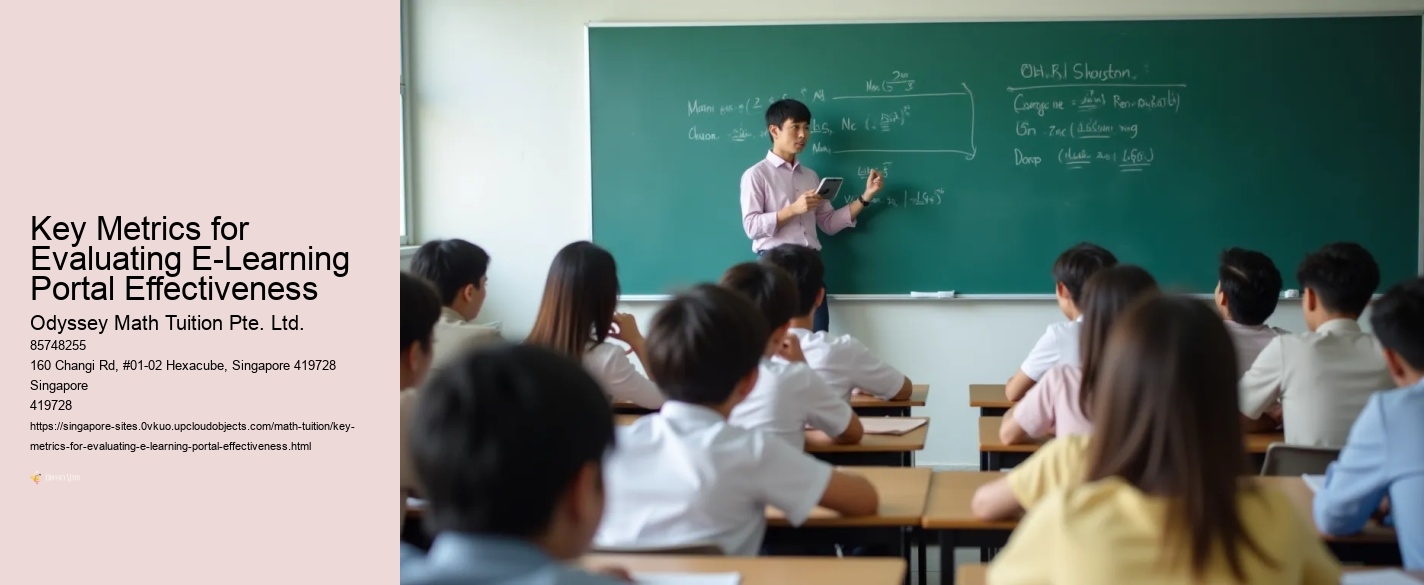



Imagine a bustling marketplace, vibrant with the chatter of eager learners and the hum of digital tools, each stall offering a unique pathway to mastering the art of mathematics. This is the world of e-learning portals, an ever-expanding universe where adaptability and scalability are the keys to unlocking potential. For Singaporean parents with children in Secondary 1, ensuring their kids thrive in secondary school mathematics is a journey filled with opportunities and challenges.
Adapting to Student Needs: The Heart of Effective Learning
In the intricate dance of education, the ability of an e-learning portal to adapt to the diverse needs of students is akin to a skilled conductor leading a symphony. Each student is unique, with their own rhythm and pace, especially when tackling the complexities of secondary 1 math tuition. An effective portal recognizes this diversity by offering customized learning paths that cater to individual strengths and weaknesses.
Consider the scenario of a student struggling with algebraic expressions. An adaptive e-learning portal would provide targeted exercises and step-by-step tutorials, allowing the student to build confidence and competence at their own pace. This personalized approach not only reinforces foundational knowledge but also prepares students for more advanced topics, ensuring a smooth transition through the secondary math curriculum.
- Research by EdTech Magazine indicates that personalized learning can improve student engagement and outcomes by up to 30%.
Scalability: Expanding Horizons with Advanced Topics
Scalability in an e-learning portal is like a tree growing steadily, its branches reaching out to explore new heights. As students progress, the portal must expand its offerings to include advanced topics, ensuring continuous intellectual growth. For Singaporean students, this means delving into complex areas such as trigonometry, calculus, and advanced geometry as they advance in their studies.
Picture a portal that evolves alongside your child, introducing new challenges and resources at just the right moment. This dynamic growth is crucial in a competitive educational landscape, where staying ahead requires constant adaptation and an ever-expanding toolkit of knowledge.
- A study by the Bill & Melinda Gates Foundation found that scalable e-learning platforms can increase access to quality education by 50% in underserved areas.
24/7 E-Learning Portal Utilization: Learning Beyond Boundaries
In a world where learning knows no bounds, a 24/7 e-learning portal becomes a lighthouse guiding students through the night. The flexibility to access educational materials anytime, anywhere, empowers students to reinforce their understanding of secondary math concepts at their own pace.
Imagine a student revisiting a challenging topic late at night, the quiet hum of the portal providing clarity and insight. This continuous access fosters a culture of independent learning, where students can explore, practice, and revise whenever inspiration strikes. It's a crucial component for mastering mathematics, where consistent practice is key to success.
- According to a report by the International Society for Technology in Education, 24/7 access to learning resources can enhance student achievement by up to 20%.
Engagement and Motivation: Keeping the Flame Alive
Engagement is the spark that ignites the flame of learning, and a captivating e-learning portal is like a well-told story that captures the imagination. Interactive elements, gamified learning experiences, and real-world applications are just a few strategies to keep students motivated and invested in their mathematical journey.
Consider the unsung heroes of education: the developers and educators who craft these engaging experiences. Their creativity and dedication transform learning into an adventure, where every problem solved is a step closer to mastery. By weaving storytelling into the fabric of education, portals can maintain students' attention and enthusiasm for mathematics.
- Gamification in education has been shown to increase student motivation and engagement by up to 48%, according to a study by the University of Colorado.
Future Outlook: The Promise of Innovation
As we look to the horizon, the future of e-learning portals is bright with promise and potential. Emerging technologies such as artificial intelligence and machine learning are poised to revolutionize the way students interact with educational content. Imagine a portal that anticipates a student's needs, offering personalized recommendations and insights based on their learning patterns.
For parents and students alike, the call to action is clear: embrace the opportunities presented by these digital tools, and harness their power to transform the educational experience. By investing in adaptable and scalable e-learning portals, we can ensure that the next generation of learners is equipped to excel in secondary school mathematics and beyond.
- According to a report by McKinsey & Company, AI in education could increase global GDP by $126 billion annually by improving learning outcomes.